Prevent Confidential Document Leaks with AntiLeak® Security Paper
Protect Confidential Information from Theft, Leakage & Insider Threats
AntiLeak® Security Paper is a physical document security solution designed to help detect the unauthorized removal of confidential, classified and sensitive printed documents.
Despite major investments in cybersecurity, printed documents remain a critical security gap. Confidential information can still be copied or removed through physical documents, exposing organizations to insider threats, industrial espionage, compliance violations and data breaches. AntiLeak® Security Paper adds a physical security layer to help organizations protect sensitive printed information and prevent unauthorized document removal.

The Hidden Risks of Confidential Documents
Unauthorized Access & Document Theft
Sensitive documents can be copied, removed or shared without authorization, exposing confidential information and increasing the risk of insider threats and data leaks.
Regulatory & Compliance Risks
Inadequate protection of confidential and classified documents can lead to compliance violations, financial penalties and legal consequences.
Industrial Espionage & Intellectual Property Theft
Trade secrets, intellectual property and other sensitive information stored in physical documents can be targeted for unauthorized removal, corporate espionage and competitive intelligence.
Why TAGIT AntiLeak® Security Paper?
TAGIT AntiLeak® Security Paper adds a physical security layer to sensitive printed documents, helping organizations detect unauthorized document removal and strengthen protection against information leakage, insider threats and industrial espionage.
Controlled Secure Printing
Supports controlled printing environments by helping verify that sensitive documents are printed on authorized AntiLeak® Security Paper.
Integrated Security Detection
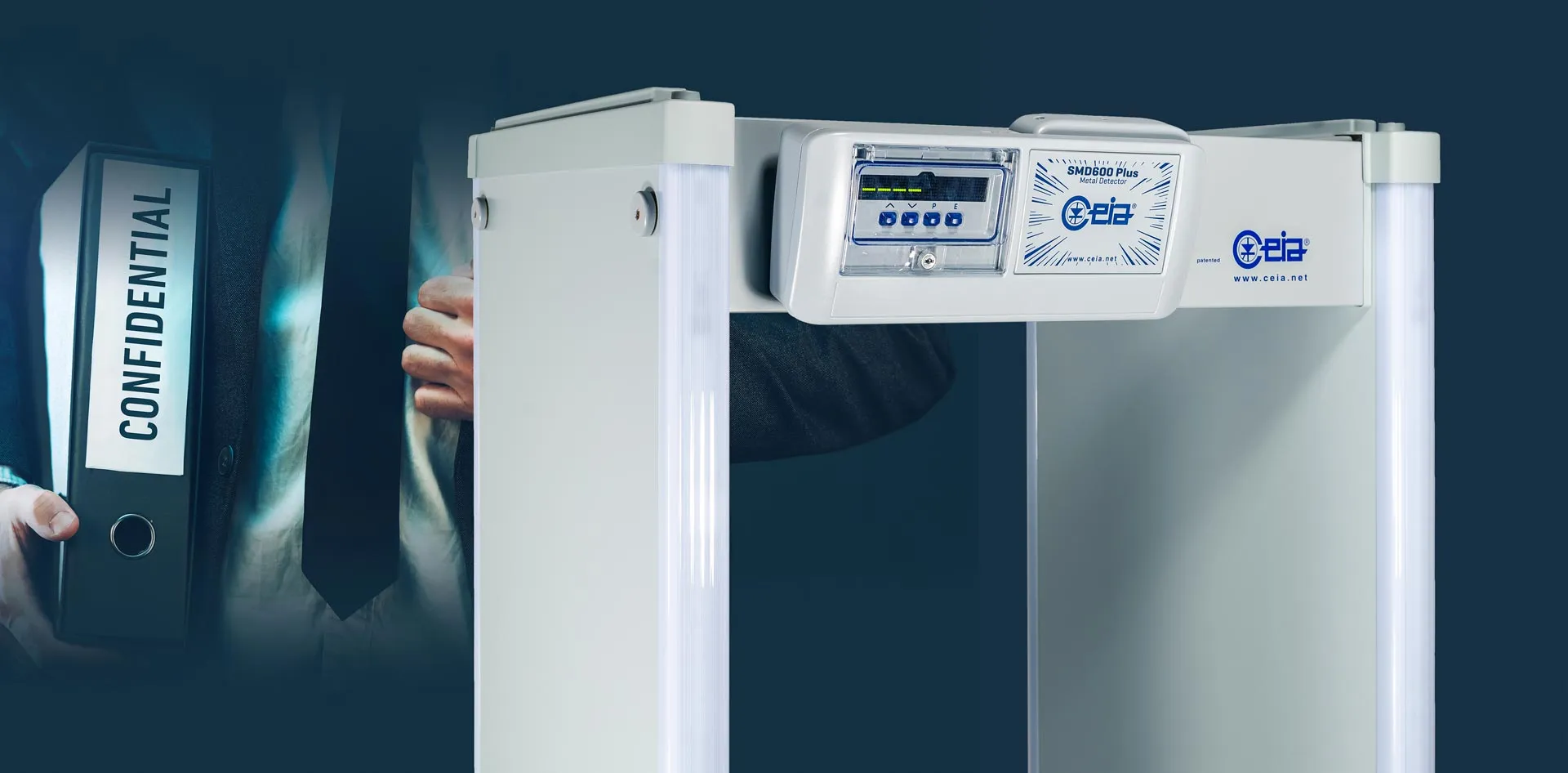
Designed for use with compatible TAGIT EM security systems and selected security detection equipment for controlled entrances, exits and other security checkpoints.
Enhanced Insider Threat Protection
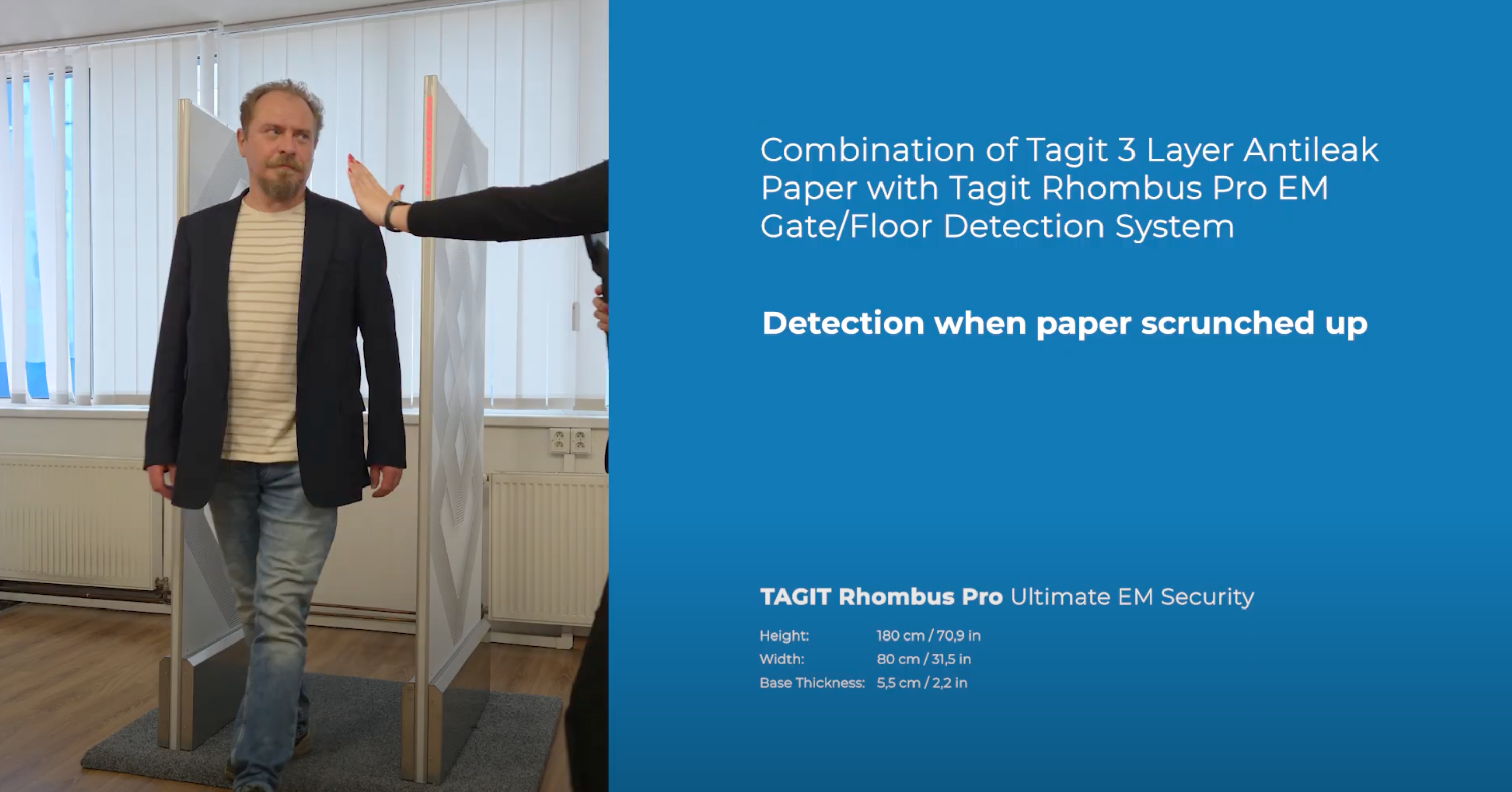
Helps detect unauthorized removal of protected documents, including documents that are folded or concealed, providing an additional physical security layer for confidential and sensitive information.

How It Works
Protecting Sensitive Documents with TAGIT AntiLeak® Security Paper
TAGIT AntiLeak® Security Paper adds a physical security layer to confidential and sensitive printed documents. From controlled printing to exit detection, the technology helps organizations identify unauthorized document removal and protect information against physical data leakage.

Secure Printing

Real-Time Document Detection

Protection Against Document Theft
AntiLeak® Security Paper is developed by TAGIT S.A., a European specialist in physical document security and electromagnetic security technologies. TAGIT develops solutions designed to help organizations protect confidential information, intellectual property and sensitive printed documents against unauthorized physical removal.
AntiLeak® Security Paper Technical Specifications
OFFICE SECURITY PAPER
- Paper Weight85 g/m²
- Thickness80–110 µm
- A4 - 210 × 297 mm500 sheets per pack
- A3 - 297 × 420 mm250 sheets per pack
- Letter - 8.5 × 11 in500 sheets per pack
- Tabloid - 11 × 17 in250 sheets per pack
CLEANROOM-READY SECURITY PAPER
- Paper Weight85 g/m²
- Thickness80 - 110 µm
- A4 - 210 × 297 mm500 sheets per pack
- A3 - 297 × 420 mm250 sheets per pack
AntiLeak® Security Paper Applications by Industry
Protecting confidential documents, intellectual property and sensitive information across security-critical environments

High-Tech Companies
Help protect intellectual property, confidential technical documents and sensitive business information from unauthorized removal and industrial espionage.
Research Facilities
Help protect confidential R&D documents, proprietary research and sensitive technical information from unauthorized physical removal.

Battery Production
Help protect proprietary battery technologies, process documentation and next-generation energy research from insider threats and industrial espionage.

Semiconductor Manufacturing
Help protect proprietary chip designs, process documentation and semiconductor R&D from unauthorized document removal, insider threats and industrial espionage.
Military & Defense Installations
Help protect classified documents, operational information and sensitive defense materials from unauthorized physical removal, insider threats and disclosure.
Government Agencies
Help protect classified and sensitive government documents from unauthorized removal, information leakage and insider threats.
Financial Institutions
Help protect confidential financial documents, transaction records and regulated information from unauthorized removal, disclosure and insider threats.
Real-World Document Leaks: Why Physical Document Security Matters
Physical documents remain a security risk even in organizations with strong cybersecurity controls. Real-world document leaks show how printed confidential, classified and proprietary information can be removed or disclosed outside authorized environments, highlighting the importance of physical document security.
1971 | Pentagon Papers (U.S. Department of Defense)
Documents: Approximately 7,000 pages relating to U.S. decision-making and the Vietnam War.
Information involved: Classified government and military information.
Security relevance: A well-known historical example of sensitive government information being physically copied and disclosed outside authorized channels.
1982 | IBM–Hitachi Industrial Espionage Case
Documents involved: Technical documentation relating to IBM mainframe technology.
Sensitive information involved: Proprietary technical information and computer-system technology.
Security relevance: A major historical industrial-espionage case illustrating the value of protecting proprietary technical information and intellectual property.
1994 | Brown & Williamson Tobacco Papers
Documents involved: Thousands of pages of internal Brown & Williamson documents.
Sensitive information involved: Internal research concerning health effects, corporate assessments and communications.
Security relevance: A prominent example of confidential corporate documents being copied and disclosed outside the organization.
2005 | Downing Street Memo (UK Cabinet)
Document involved: A confidential UK government memorandum concerning discussions about Iraq before the 2003 war.
Sensitive information involved: Government deliberations, intelligence assessments and foreign-policy discussions.
Security relevance: An example of a confidential government document being disclosed outside authorized channels.
2007 | Formula 1 “Spygate” (Ferrari vs. McLaren)
Documents involved: Approximately 780 pages of confidential Ferrari technical documentation reportedly became available outside the organization.
Sensitive information involved: Technical and engineering information relating to Ferrari’s Formula 1 car, including design and performance-related data.
Security relevance: The case demonstrates how large volumes of highly sensitive technical information can leave a controlled environment in physical document form, creating significant intellectual property and industrial espionage risks.
2016 | Panama Papers
Documents involved: Millions of confidential files from the law firm Mossack Fonseca were disclosed, including emails, financial records, corporate documents and other files.
Sensitive information involved: Offshore company structures, beneficial ownership information, financial records and confidential legal and corporate documentation.
Security relevance: The case demonstrates the potential consequences of unauthorized access to and disclosure of large volumes of confidential financial and legal information.
2018 | Samsung OLED Technology Leak Case
Leaked: Printed OLED panel schematics and confidential semiconductor manufacturing process documentation.
Sensitive Information Exposed: Manufacturing blueprints, production process technologies, and supply chain specifications related to OLED display production.
Impact: The incident resulted in significant financial losses, criminal convictions, and heightened concerns regarding industrial espionage within the semiconductor industry.
2020 | FinCEN Files
Documents involved: More than 2,100 confidential Suspicious Activity Reports (SARs), together with spreadsheets and other financial intelligence records submitted to or held by the U.S. Treasury’s Financial Crimes Enforcement Network (FinCEN).
Sensitive information involved: Confidential financial intelligence concerning suspicious transactions, individuals, companies, banks and potential financial crime. SARs are strictly confidential regulatory reports and do not themselves establish criminal wrongdoing.
Security relevance: The case demonstrates the potential consequences when highly confidential financial and regulatory information is disclosed outside authorized channels.
2021 | UK Ministry of Defence Bus Stop Documents
Documents involved: Approximately 50 pages of sensitive UK Ministry of Defence documents were found by a member of the public at a bus stop in Kent.
Sensitive information involved: Defence information relating to HMS Defender, military operations and other sensitive planning and policy matters.
Security relevance: The incident demonstrates how sensitive government and defense information can be exposed when physical documents leave a controlled environment.
2023 | Pentagon Classified Documents Leak
Documents involved: Hundreds of pages of classified U.S. national defense information were unlawfully removed or retained and shared through the Discord social media platform.
Sensitive information involved: Classified intelligence concerning national defense, including information related to the Russia–Ukraine conflict, troop movements and sensitive intelligence sources and methods.
Security relevance: The case demonstrates how highly classified information can leave a secure environment and subsequently be distributed digitally, creating serious national security risks.
1971 | Pentagon Papers (US DoD)
Leaked: 7,000 printed pages of classified Vietnam War reports
Should have protected: Military strategies, diplomatic records, classified assessments
Impact: National security implications; led to a significant legal and credibility crisis for the U.S. government.
2021 | UK Ministry of Defence Bus Stop Leak
Leaked: 50+ printed pages on military operations and Russian engagement
Should have protected: Deployment strategies, classified briefings
Impact: Raised concerns about internal security and led to a review of security protocols.
2023 | Pentagon Discord Leak
Leaked: Printed & folded classified intelligence briefings
Should have protected: Military strategies, sensitive operations, surveillance data
Impact: Led to a significant internal review and security overhaul.
2005 | Downing Street Memo (UK Cabinet)
Leaked: Secret printed memo revealing pre-war plans
Should have protected: High-level policy deliberations, intelligence briefings
Impact: Resulted in political backlash and an intensified public debate about intelligence.
2016 | Panama Papers
Leaked: Printed & scanned documents from Mossack Fonseca law firm
Should have protected: Tax avoidance structures, offshore ownership, confidential documents
Impact: Led to global investigations and recovery of significant financial assets.
2018 | FinCEN Files Leak (US Treasury)
Leaked: Photographed Suspicious Activity Reports (SARs) printed from secure systems
Should have protected: Confidential banking intelligence
Impact: Sparked a global crackdown on illegal financial activities.
1982 | IBM–Hitachi Espionage
Leaked: Printed IBM mainframe manuals and chip design specifications
Should have protected: Hardware architecture, software guides
Impact: Resulted in a high-profile espionage investigation.
2018 | Samsung OLED Trade Secret Leak
Leaked: Printed OLED panel schematics and production process documents
Should have protected: Manufacturing blueprints, supply chain specifications
Impact: Led to significant financial loss and criminal convictions.
2007 | Formula 1 “Spygate” (Ferrari vs. McLaren)
Leaked: 780 printed pages of Ferrari’s technical car design
Should have protected: Aerodynamics specs, race strategy data
Impact: Led to a significant fine and reputational damage.
1994 | Brown & Williamson Tobacco Papers
Leaked: Photocopied internal R&D files, marketing memos
Should have protected: Research on product impact
Impact: Resulted in industry-wide lawsuits and substantial financial settlements.
Key Takeaway: Physical Documents Remain a Critical Security Risk
Real-world document leaks demonstrate that confidential, classified and proprietary information can still be exposed through physical documents, even in organizations with strong cybersecurity controls.
TAGIT AntiLeak® Security Paper adds a physical document security layer designed to help detect unauthorized document removal and protect sensitive information against physical data leakage, insider threats and industrial espionage.
How to Prevent Confidential Document Leaks
Confidential document leaks can occur when employees, contractors or other authorized users copy, photograph, scan or physically remove sensitive information. Physical document security adds an important layer of protection alongside cybersecurity and access controls.
TAGIT AntiLeak® Security Paper helps organizations address these risks by adding a physical document security layer that supports controlled printing and detection of unauthorized document removal.

Physical Document Leak Prevention — Helps detect unauthorized removal of protected documents before sensitive information leaves a controlled environment.
Enhanced Physical Document Security — Adds an additional security layer for confidential, classified and proprietary printed information.
Designed for Security-Critical Environments — Suitable for government, defense, semiconductor, financial and research environments where sensitive documents require additional protection.
These incidents show that even the most secure organizations are vulnerable to document leaks. Many breaches occur through:
- Insider threats – Employees leaking confidential documents.
- Hacking & espionage – Stolen printed materials being digitized and shared online.
- Lack of secure printing solutions – Sensitive documents being copied, scanned, or taken offsite.
With AntiLeak Print Paper, your documents are protected against unauthorized removal and duplication.
Protect Confidential Information with AntiLeak® Security Paper
AntiLeak® Security Paper FAQs
Find answers to common questions about AntiLeak® Security Paper, physical document security, document detection, secure printing and protection against unauthorized document removal.
AntiLeak® Security Paper is available in A4, A3, US Letter and US Tabloid formats, with office and cleanroom-ready specifications.
Available formats include:
• A4 (210 × 297 mm) — 500 sheets per pack, 85 g/m²
• US Letter (8.5 × 11 in) — 500 sheets per pack, 85 g/m²
• A3 (297 × 420 mm) — 250 sheets per pack, 85 g/m²
• US Tabloid (11 × 17 in) — 250 sheets per pack, 85 g/m²
Roll formats for large-format and specialized printing applications may also be available upon request.
Yes. AntiLeak® Security Paper is designed to remain detectable when folded or partially cut. Detection performance can vary depending on the condition of the document, system configuration and installation environment.
Yes. TAGIT offers an optional secure-printing sensor solution designed to help verify that confidential documents are printed on authorized AntiLeak® Security Paper, adding another layer of control against unauthorized copying and information leakage.
Yes. Compatible TAGIT security systems are designed to detect protected AntiLeak® documents even when concealed or partially shielded. Detection performance depends on the concealment method, system configuration and installation environment.
Detection range depends on the security system configuration, installation environment and application requirements. TAGIT can recommend the appropriate detection configuration based on the required entrance or checkpoint layout.
Selected AntiLeak® Security Paper configurations are designed for compatibility with specialized high-sensitivity detection systems. Compatibility and detection performance depend on the AntiLeak® configuration, detection equipment and installation environment.
AntiLeak® Security Paper is designed for organizations that handle confidential, classified or proprietary printed information. Applications include government and defense, semiconductor and high-tech manufacturing, research facilities, financial institutions and other security-critical environments.
AntiLeak® Security Paper can help protect confidential documents, classified information, intellectual property, R&D documentation, technical information, financial records and other sensitive printed materials against unauthorized physical removal.
Yes. AntiLeak® Security Paper is designed for use with standard office printers and copiers. The printer should support the selected paper weight, size and specification to ensure appropriate printing and paper handling.
AntiLeak® Security Paper can be ordered directly from TAGIT. Contact our team for product information, available formats, technical consultation, pricing and implementation requirements.
Yes. AntiLeak® Security Paper is designed for security-critical environments, including government and defense organizations handling confidential or classified printed information. It provides an additional physical security layer designed to help detect unauthorized document removal and reduce the risk of information leakage and insider threats.
Yes. AntiLeak® Security Paper is designed to help protect intellectual property and confidential R&D information against unauthorized physical removal. Applications include semiconductor designs, proprietary technologies, trade secrets, engineering documentation and other sensitive technical information.
By adding a physical document security layer, AntiLeak® Security Paper helps organizations protect valuable intellectual property in research, manufacturing and other security-critical environments.
Need More Information?
Our document security specialists can provide technical information, product specifications and guidance on deploying TAGIT AntiLeak Paper® in government, defense and enterprise environments.
Protect Classified Documents & Intellectual Property with AntiLeak® Security Paper
TAGIT AntiLeak® Security Paper helps government agencies, defense organizations and enterprises protect confidential, classified and proprietary printed information against unauthorized physical removal. Combined with compatible detection systems, it adds an additional physical document security layer for insider threat protection and intellectual property security.